Copper Wire Sculptures
I created many trees using high-grade copper wire. The smallest trees are made with about 8,000 inches of thin copper wire, around 6 to 8 inches tall, and take about 6 hours to create. The largest trees are made with about 18,000 inches of copper wire, around 20 to 24 inches tall, and take about 20 hours to create.
FYI: I use industrial wire between 16 and 20 gauge.
My trees have been sold in four different galleries and shipped as far away as Europe and Australia. As for being a millionaire from my artwork, every gallery I was ever in charged the same 50% fee. (i.e., A $500 tree becomes a $250 tree to me.) A hundred years from now, maybe things will be different and I will be a sought-after artist.
All of my trees are named and signed. Names like: “Against All Odds” or “The Front Yard”. Fun fact: My art signature is slightly different from my normal signature.
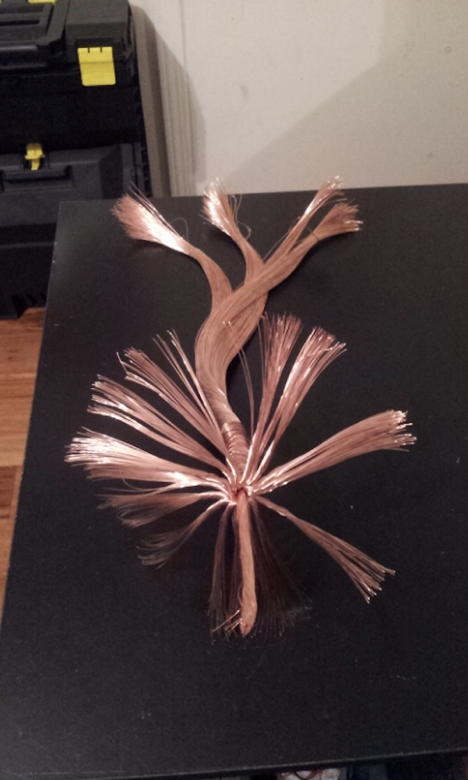
Trees start with between 300 and 600 strands of copper wire.
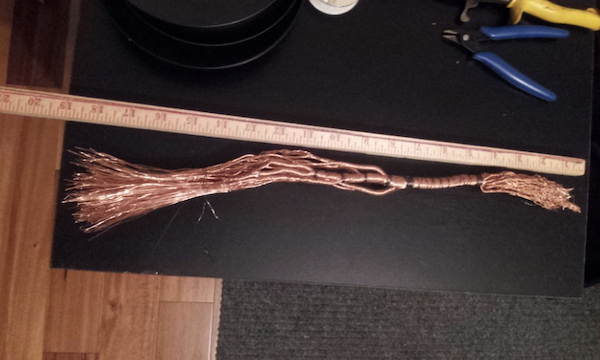
This tree is nearly finished; all that remains are the upper branches. FYI: The trunk and roots are bundled to prevent them from interfering with the twisting of the individual branches.
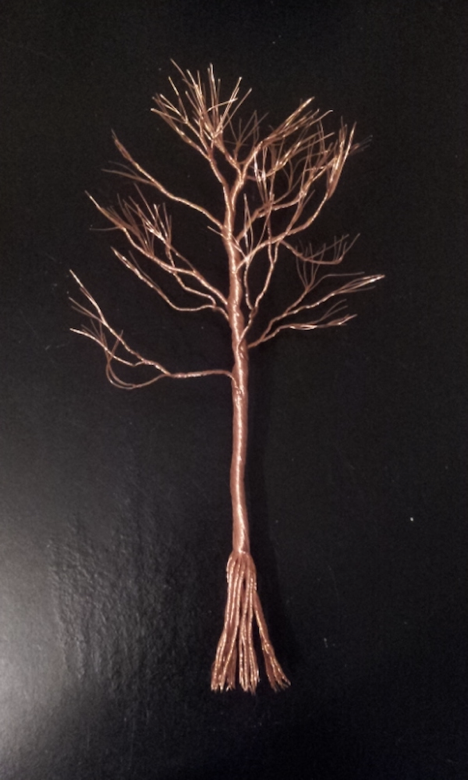
This experimental pine tree quickly ended up in the local landfill. The branches were too short, and there was an error on the lowest branch. I ran tests to check if any branch could be pulled out of its trunk section; if so, the tree was immediately discarded. Having error-free trees was a signature of mine.
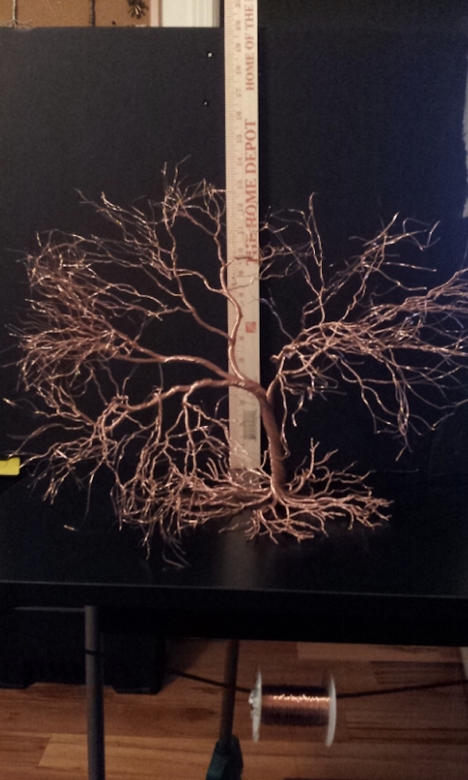
This tree survived my stress tests and is now ready for mounting in epoxy and a final 'fluff up.' The epoxy step is the most dangerous; if it fails, twenty hours of work end up in the local landfill. Failures included epoxy not curing, excessive air bubbles, roots incorrectly positioned, or, sadly, a single drop of resin on the black plates I eventually started using as bases. On the bright side, I was a very quick learner and only lost five or six trees.
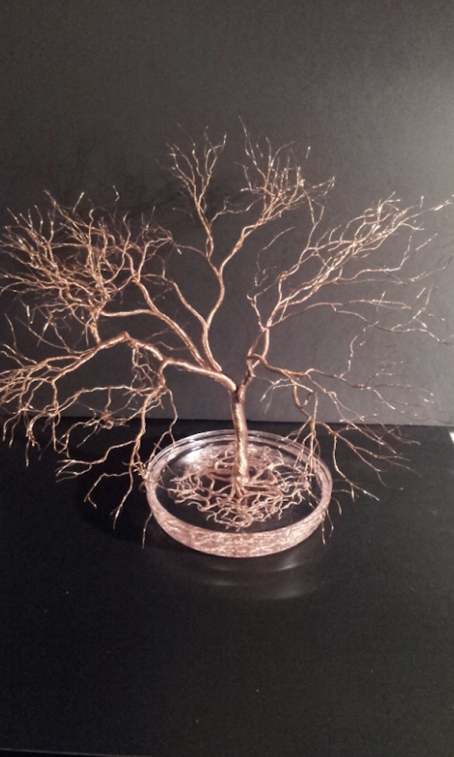
With my first-generation trees, I used solid epoxy bases. I believe there are around eight first-generation trees out there. The photos do not do these trees justice, as they were quite large. Gravity limited me to heights of around 20-22 inches (due to the gauge of wire I used). Each first-generation tree sold for $500.
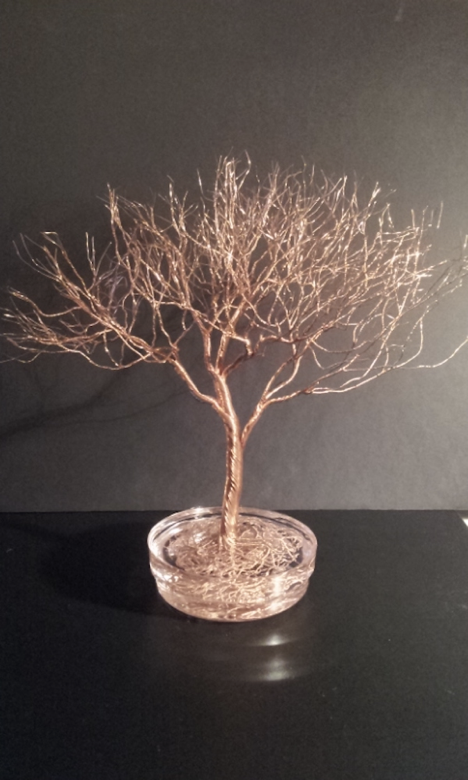
Another first-generation tree. Fun fact: I used the bottom of a household container to hold the epoxy. After it cured, I removed the container base.
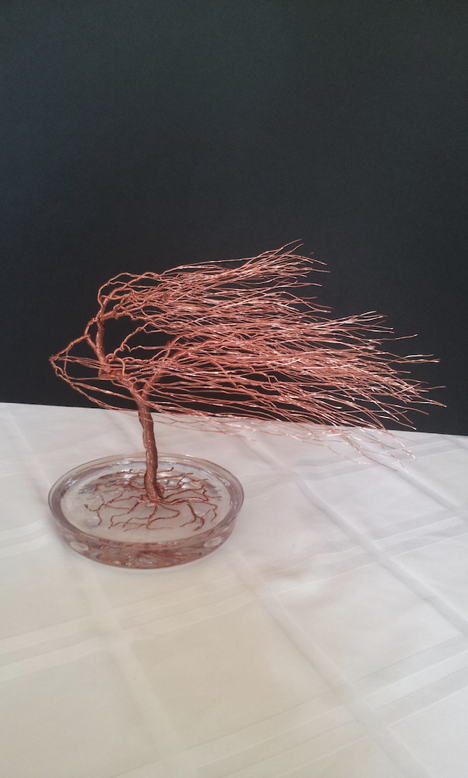
An early, windswept tree. I only created one windswept first-generation tree.
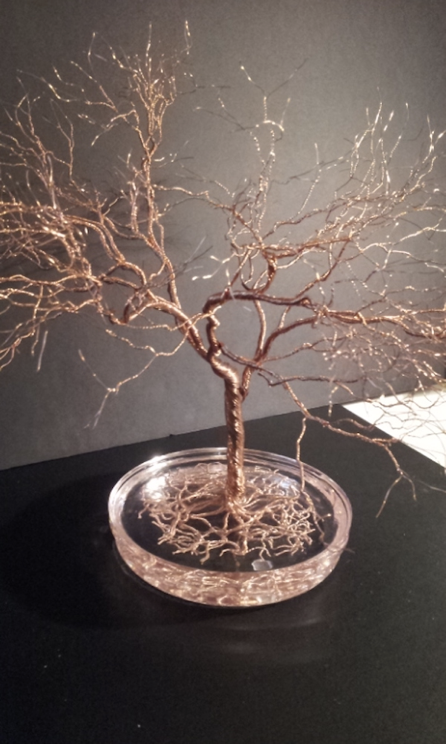
A final example of a first-generation tree, showcasing the full potential of this early design.
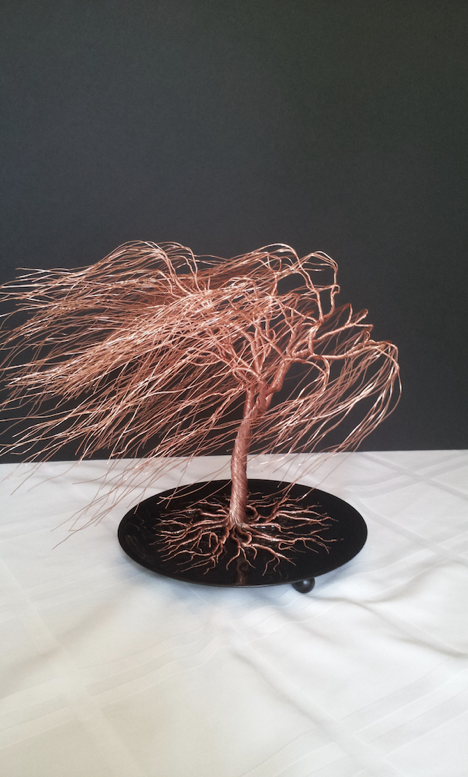
This is an early second-generation tree. At that time, I did not create windswept trees with matching windswept roots, and the overall angle of the trunk is much too vertical for my taste.
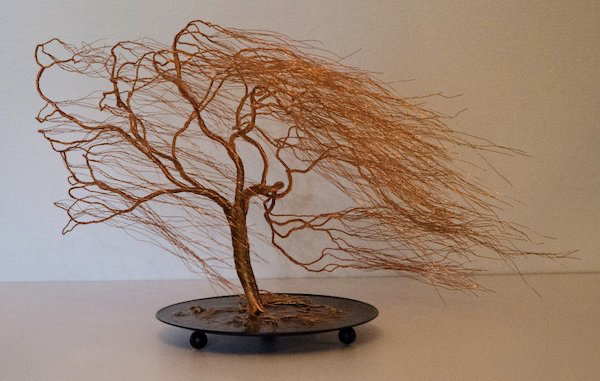
Another windswept tree, still early second-generation. Sadly, I forgot her name, but she was one of my favorites to create due to the lower right branch's Z shape. I liked how the Z shape turned out so much that I used the concept on several later windswept trees.
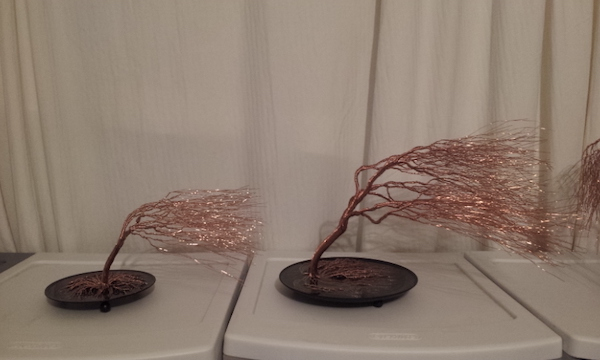
Reverse windswept trees—i.e., blowing with the wind instead of against it—I did not enjoy creating them, but gallery owners preferred them over my signature windswept trees. I created a ton of these.
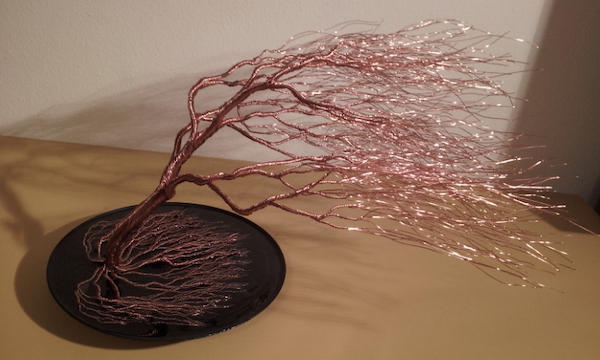
Of all my trees, my spouse took this one (Strong Wind) off the shipment line and brought it to her office. It has been there ever since. Note the windswept roots; they are late second-generation.
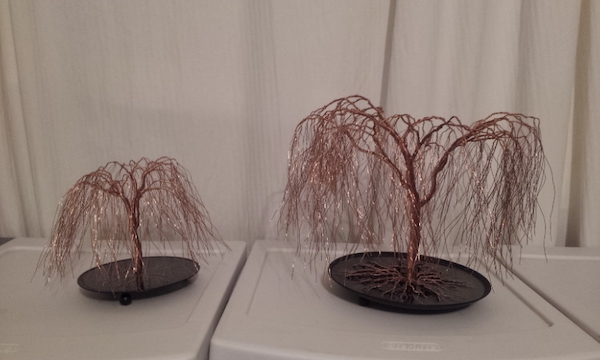
I also created willow trees, but they did not sell very well. Although all were eventually sold, it was not in a timely manner.
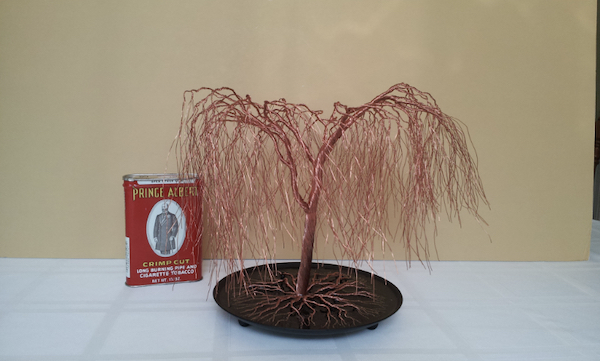
Willow trees are challenging to 'fluff up.' Every branch must be horizontal enough to give the illusion of a willow tree from every possible viewing angle. In other words, you're looking at several hundred wires all pointed in the same general direction. This effect is difficult to convey with a two-dimensional photograph. Ultimately, they were hard to create, and I enjoyed the challenge.
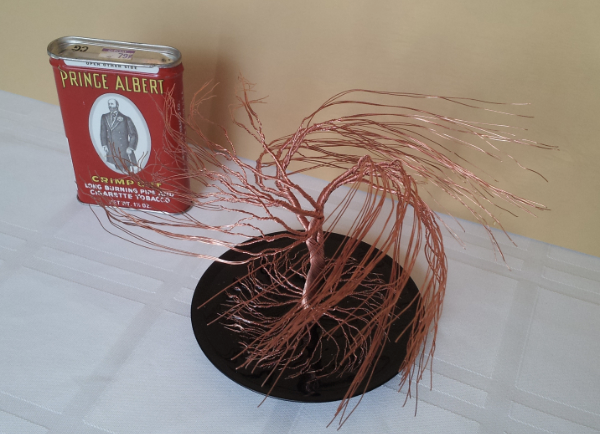
I created 'Niki The Twister' as a 'one-off' sample that I could bring to galleries; it was never meant to be sold in a gallery. It has already been claimed by one of the grandchildren, who will take it when I depart.
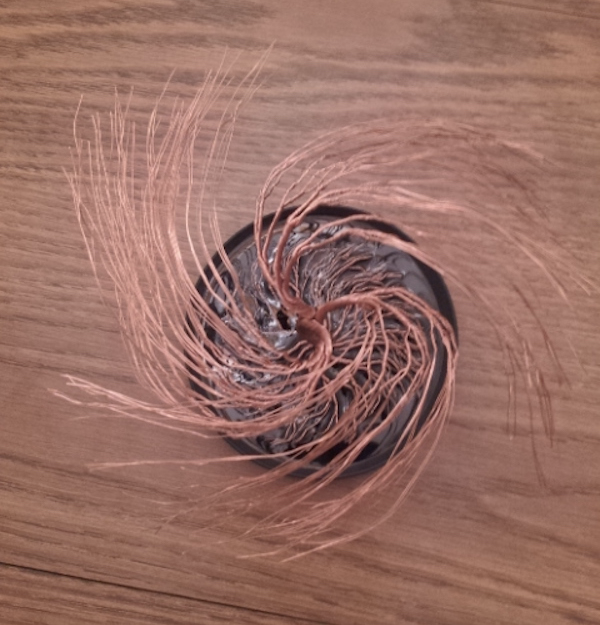
An overhead view of 'Niki The Twister.' It was a fun project, but no gallery ever requested a large-scale version.
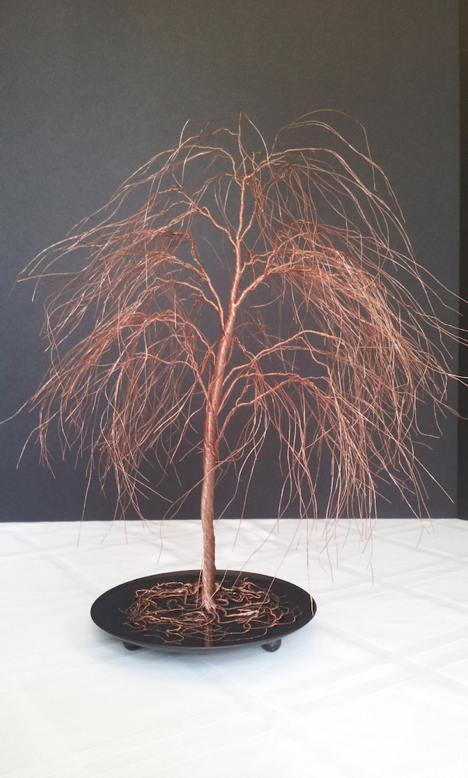
I did not use standard copper wire for this 'test' tree; instead, I used an electrical extension cord's wire. It is extremely delicate. Unlike all of my other trees, which use thicker, industrial copper wire, this one is a 'one-off.' This tree remains unnamed and unsigned, sitting in my office.
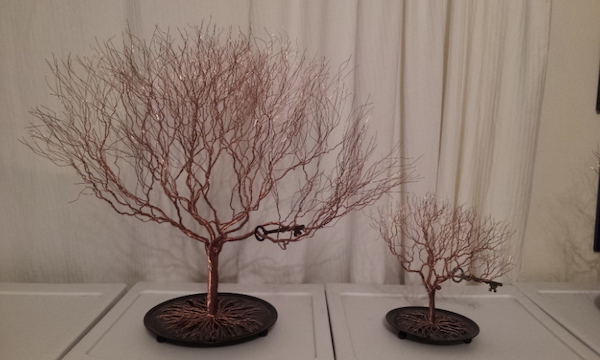
I intertwined skeleton keys into select trees.
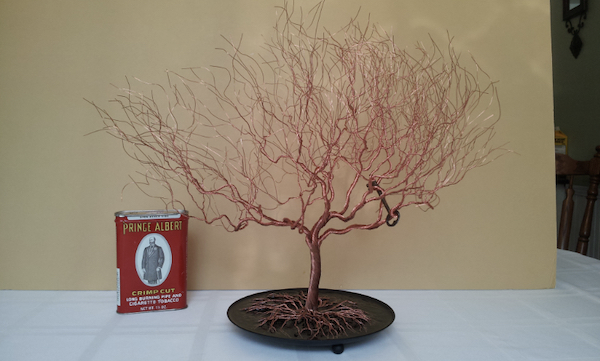
This tree is called 'Captivate,' not to be confused with her smaller sister, 'Captive.'
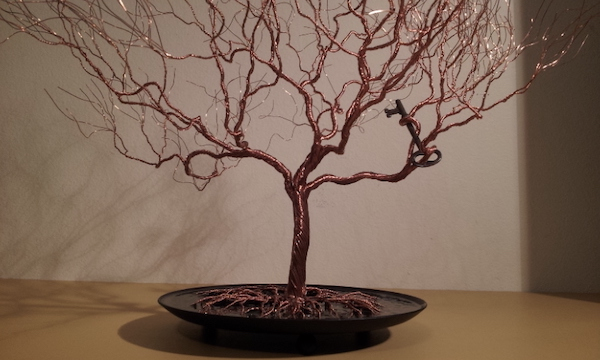
'Captivate,' shown at an angle to highlight the root details, is fully embedded in the epoxy base but with some roots exposed. 'Captivate' is a mid-second-generation tree.
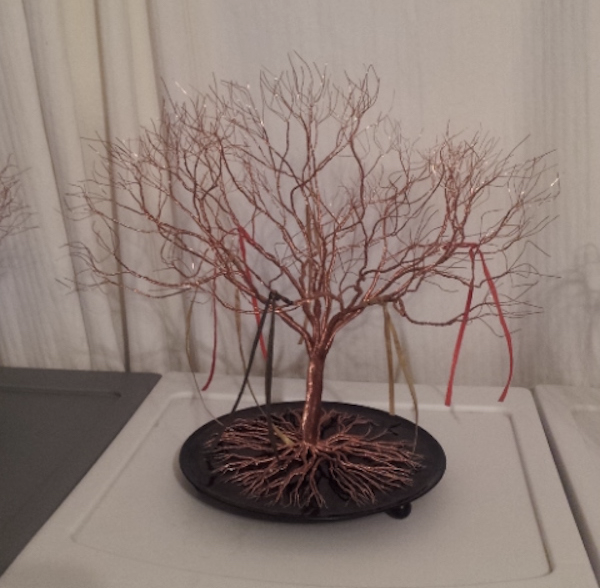
I subtly added clearly pagan ribbons to some trees. I used festival-type names for this type of tree, but I don't remember the name of this one. Maybe it's 'Dance' or perhaps 'Our Time'?
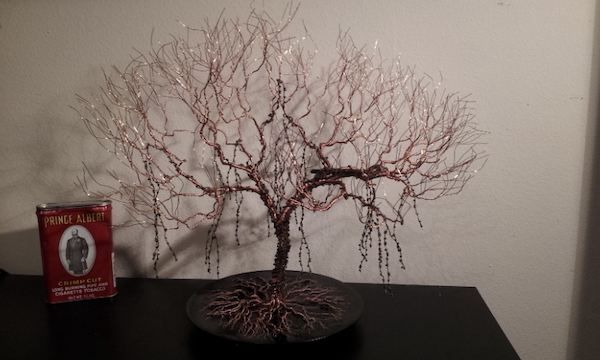
I created this tree with a swamp look. The vines took hours to create, and it sold the day I brought it to the Mobile, Alabama gallery. The gallery wanted more, but I never made another vine tree because of the extensive work involved in intertwining the vines into the branches. This tree, named 'The Swamp,' took maybe twenty-five plus hours to create.
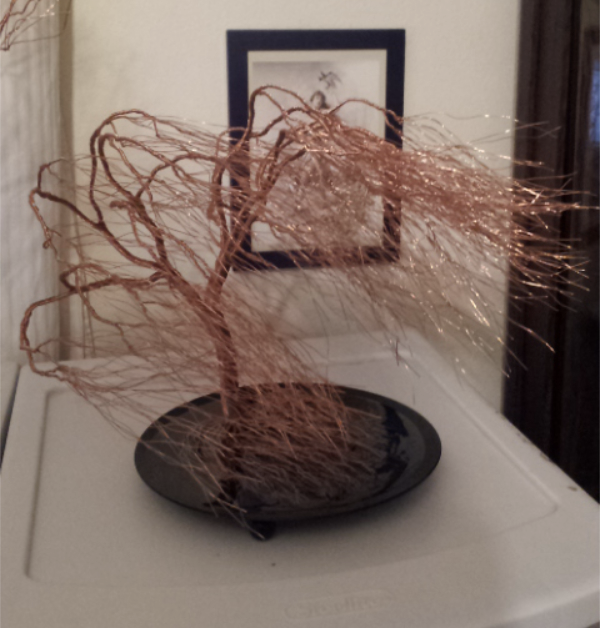
This is what I would have liked to be known for: a late second-generation, windswept tree that is large and imposing. Her name is 'Defiance.' Fun fact: I used powerful (opposition) names because I thought they would resonate well with cancer survivors, boxing champions, recovering addicts, etc. One of the sister trees to 'Defiance' was named 'Against All Odds,' which gives you an example of the names I selected for this type of tree.
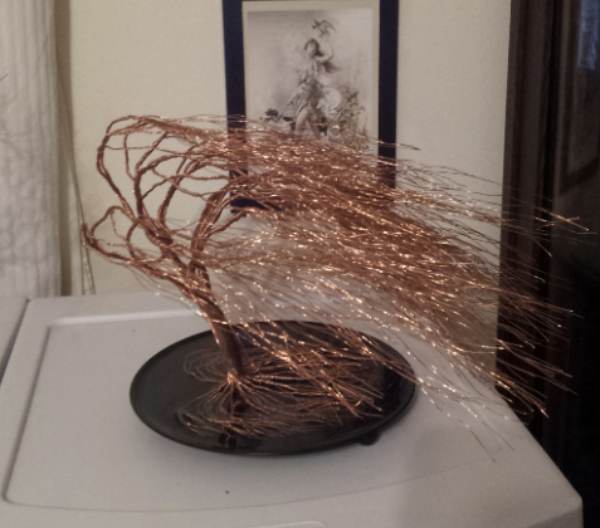
Another windswept tree, name unknown, sits in the pre-shipping area of my office.
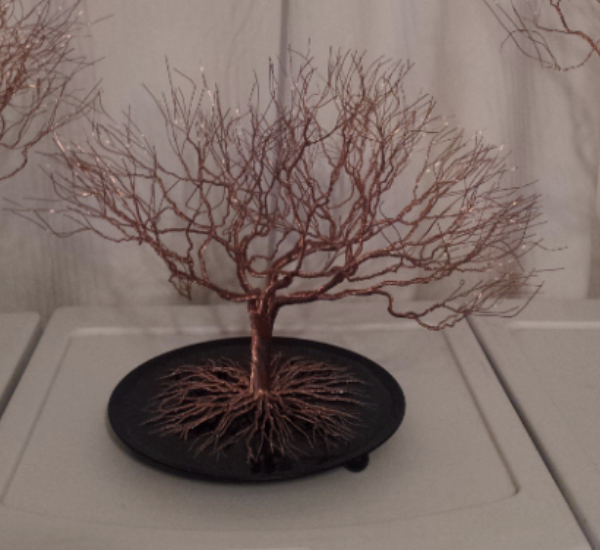
This sturdy tree is named 'Stout.'
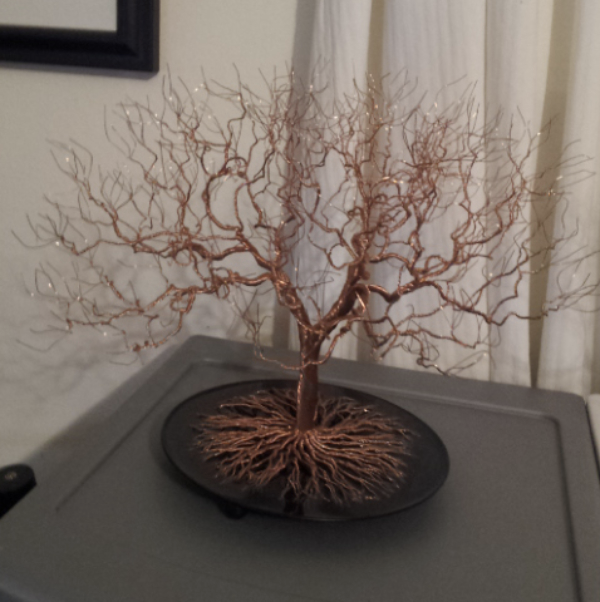
This tree has a serious V-shaped trunk split. It was difficult to create, with so many copper wires being diverted at once. A few trees ended up in the local landfill until I perfected the splitting method.
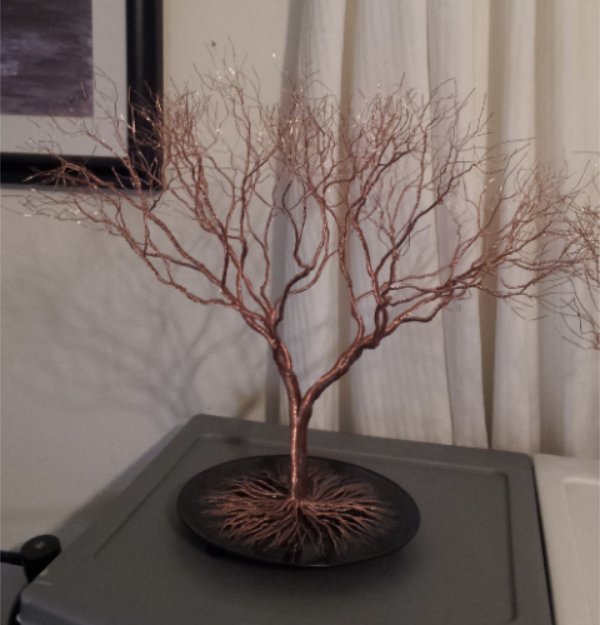
Another V-shaped split. It is very difficult to get right, but once you do...
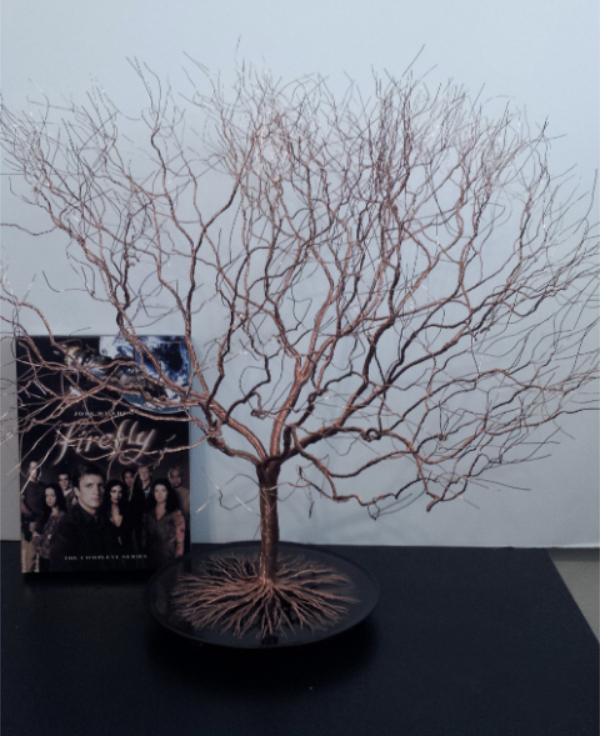
Any higher or wider, and gravity would gradually pull a tree of this size down within a month.
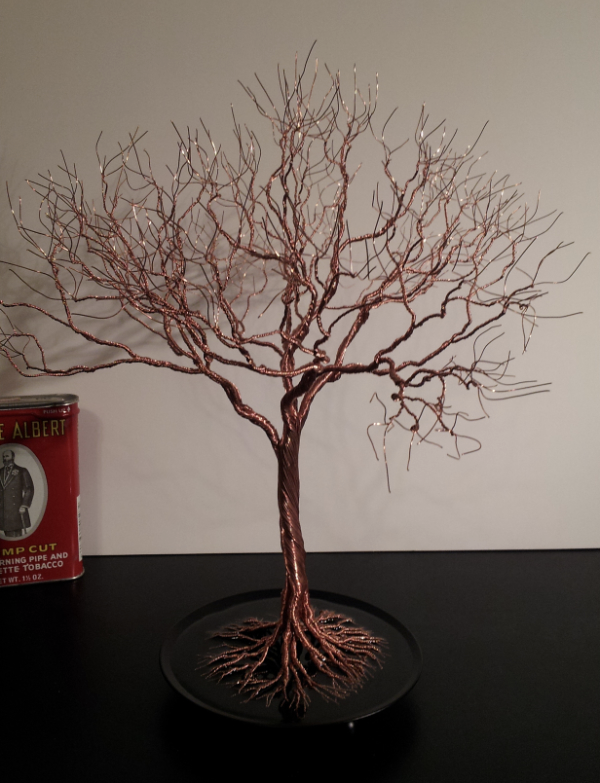
This tree uses thicker wire than the one above, as I was experimenting with the extreme lower trunk section.
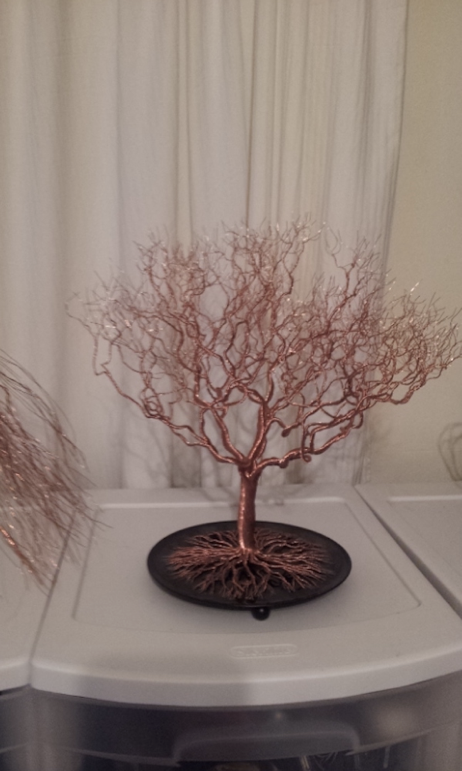
Unfortunately, these oaks were my best-sellers. This one has been 'de-fluffed' and is ready for boxing. To be ‘fluffed’ back up at the destination.
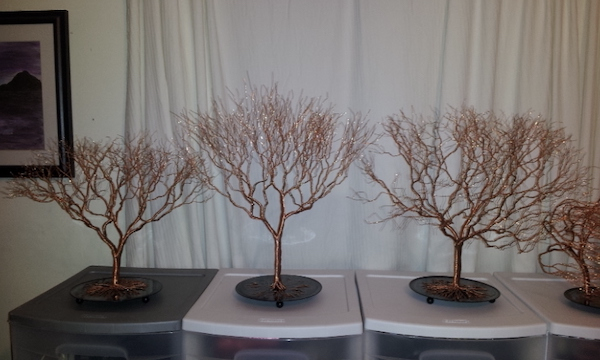
More large oak trees are ready to be 'de-fluffed' and packed into shipping boxes.
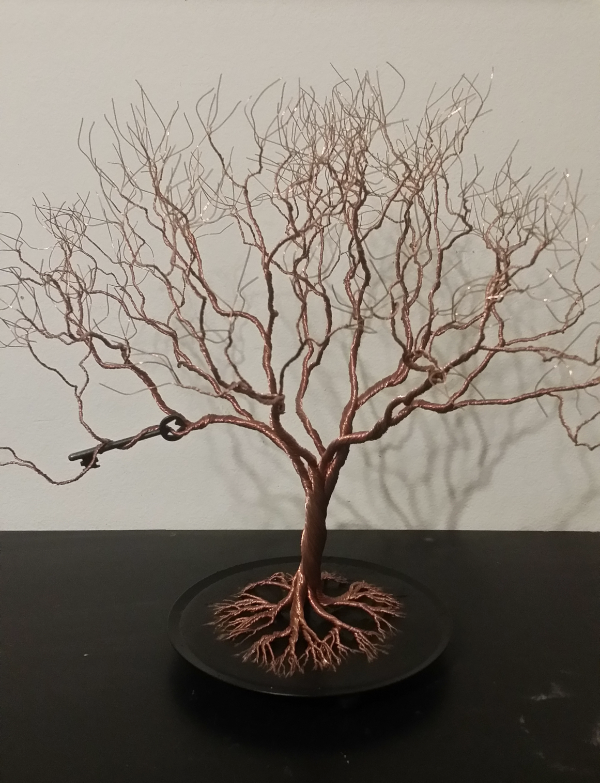
Unnamed, but I like the way the roots turned out.
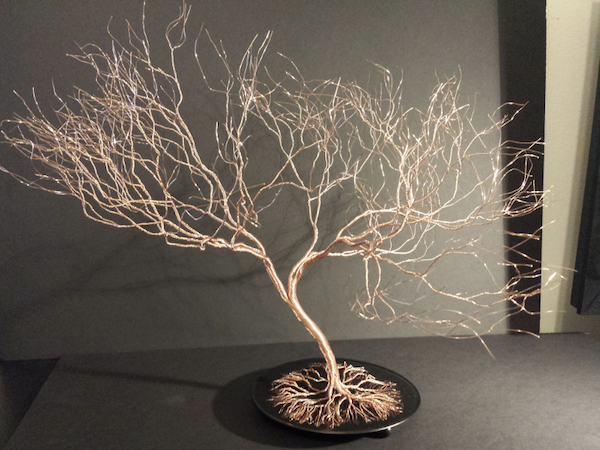
I created a few trees like this one. My inspiration came from trees I saw in Oklahoma mixed with Bonsai elements. This one also features the challenging V-shaped split.
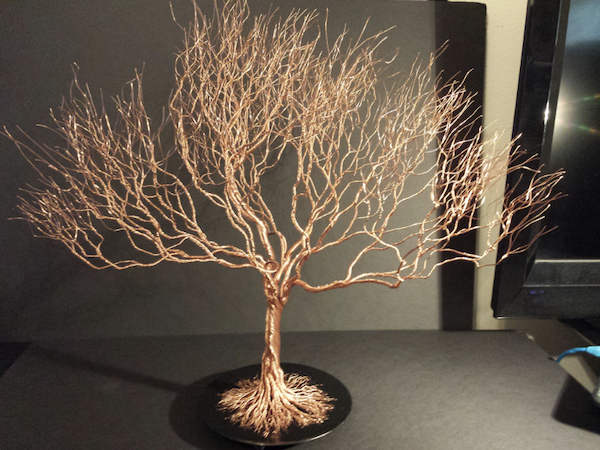
This may be the largest tree I created, standing about 25 to 27 inches tall and using around 20,000 inches of copper wire. It was a bit hard on my hands twisting the wire, but I made it work.
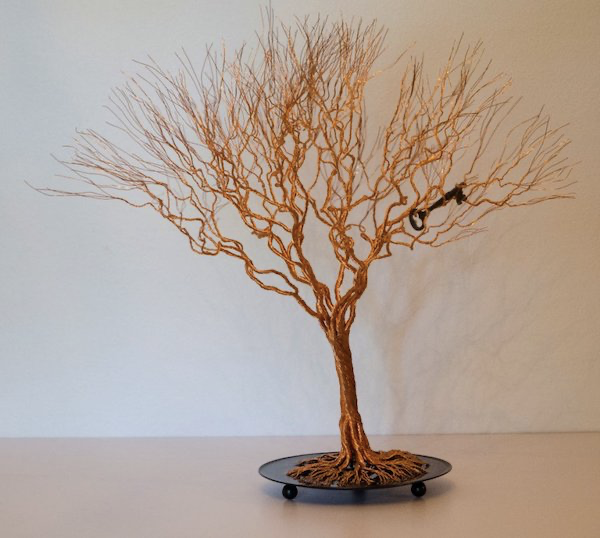
This was a fun tree named Spike. I could have rearranged the branches for a fuller look, but thought the spiked appearance best suited her personality. Notice the lower third trunk section; this subtle change evolved into a signature look for my entire late second-generation line.
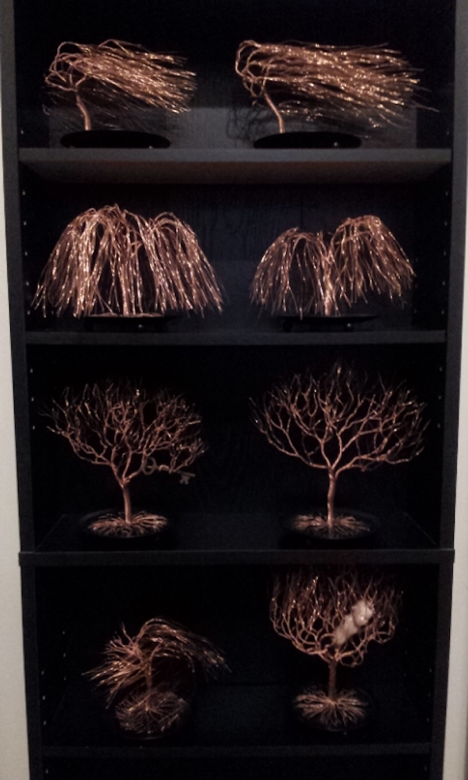
Very small trees on a shelf are used for product samples.
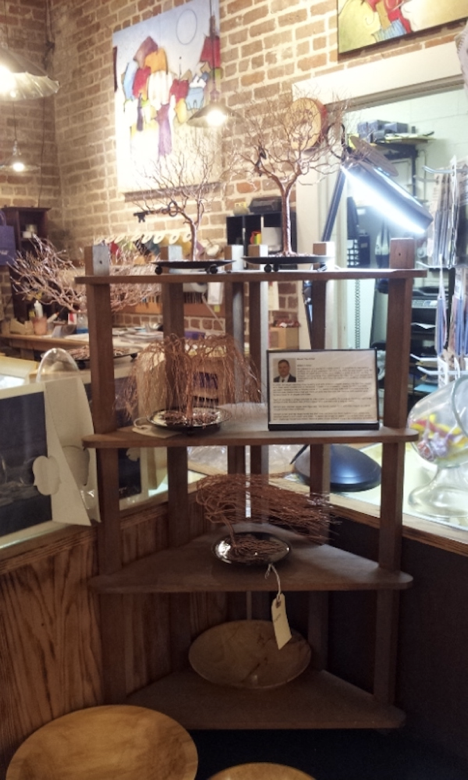
My trees on display in a gallery in Mobile, Alabama.
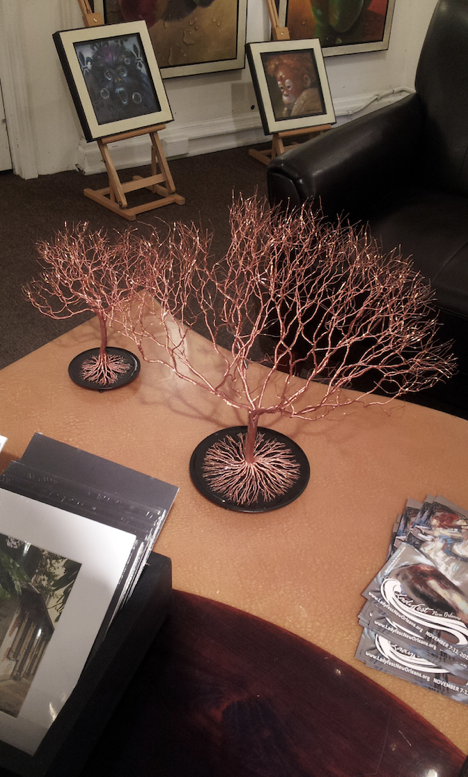
My trees are displayed at an upscale gallery in New Orleans, Louisiana, near the conference desk where customers can look at them while discussing more expensive artwork such as paintings and photographs. The large tree was priced at $500 plus, while the smaller ones would have been $250.
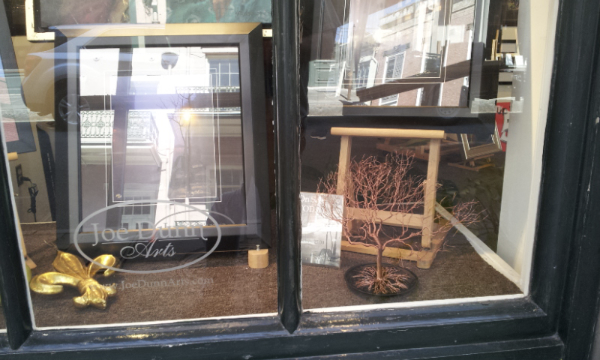
Window display of my trees at the gallery in New Orleans, Louisiana.
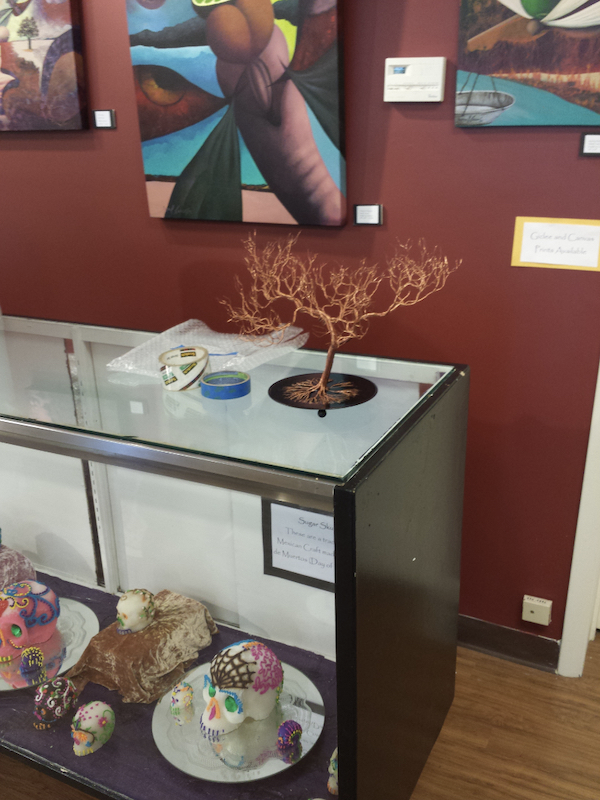
One of my trees being unpacked at a different gallery.
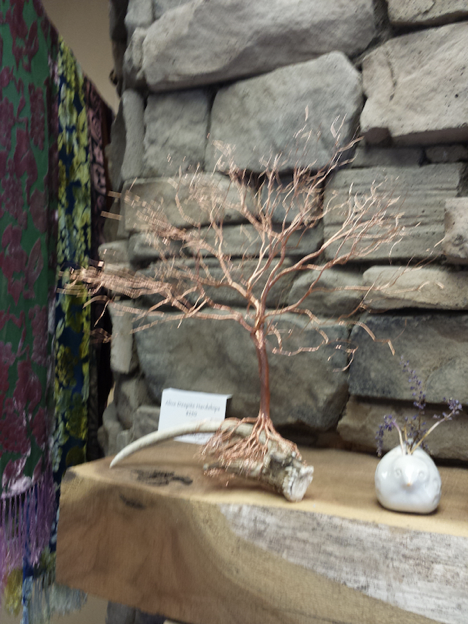
A tree mounted on a deer antler in Gatlinburg, Tennessee. I learned that few 'rednecks' visit art galleries there... This tree never sold and is sitting in my office along with its sister.
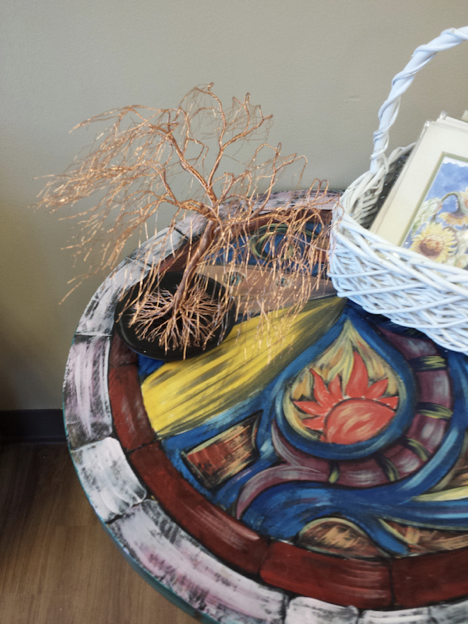
Same gallery in Gatlinburg, Tennessee. Unlike the antler tree, this one sold. It's a windswept tree with windswept roots, clearly mid-second generation. She looks like a tree named 'Steadfast,' but I would have to see the bottom to be certain.
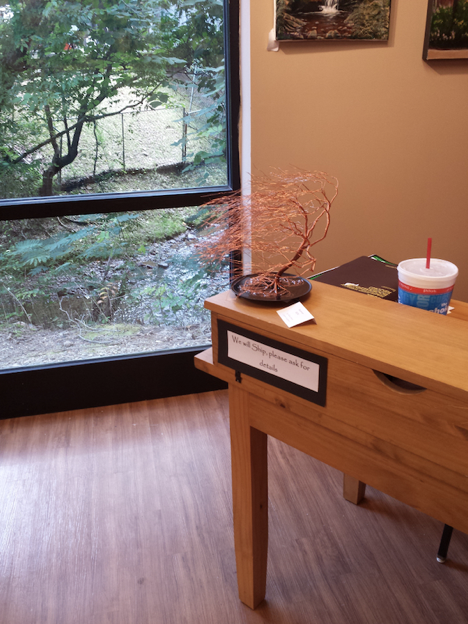
Judging from the window, this was also an art gallery in Gatlinburg, Tennessee. I did not appreciate the owner's drink being placed next to my tree, but what can you do...
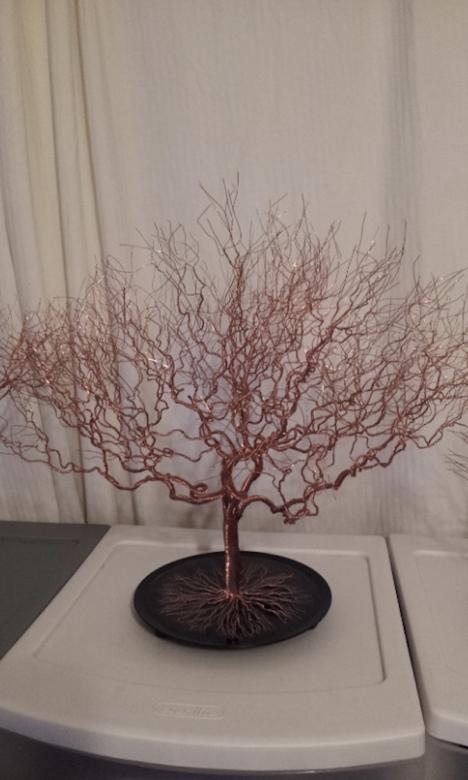
I saved the best for last; her name is Penny. I put Penny into the New Orleans gallery, where she instantly sold. On the bright side, I got to meet the new owners—an older couple with a grandchild also named Penny. The photograph does not do the beautiful spirals justice. Regret: I would pay double what they paid to get Penny back.